
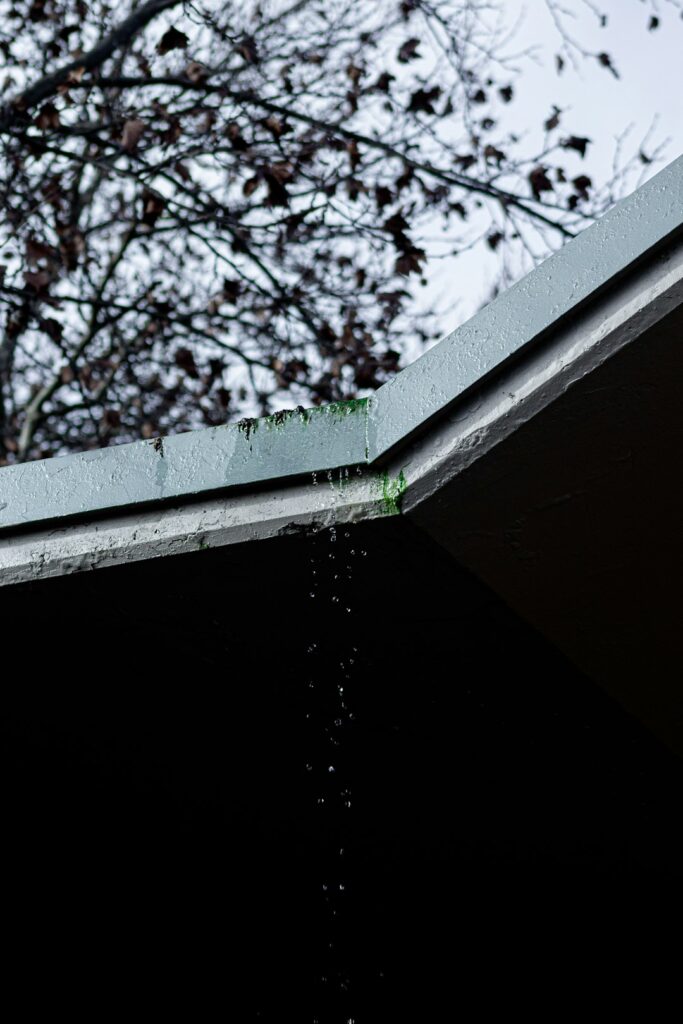
Why do clean gutters matter to a roof?
Clean gutters help move rainwater and melting snow away from the roof, siding, foundation, and surrounding soil. When gutters become blocked, water can back up beneath roofing materials, collect along roof edges, or overflow against the home.
For households in Bloomfield, NY, this matters because roofs must handle changing conditions through the year. Spring rain, summer storms, falling leaves, ice, and repeated freeze-thaw cycles can all place stress on drainage systems. Gutters are a basic part of the roof’s water-management system, not merely an accessory attached to the edge of the house.
A gutter that drains properly helps keep water moving in a controlled path. A clogged gutter allows water to spread into areas where the roof and exterior walls were not designed to manage constant moisture.
What happens when gutters clog?
The most common problem is water overflow. Leaves, twigs, roof granules, and other debris can form a dam inside the gutter. During heavy rain, water then rises above the gutter and spills over the front or back edge.
Overflow may cause several roofing-related problems:
- Water can soak the fascia board behind the gutter.
- Moisture may reach roof sheathing and attic insulation.
- Repeated wetting can contribute to wood decay.
- Water may run down exterior walls and stain or damage siding.
- Soil erosion can expose parts of the foundation.
- In cold weather, trapped water can freeze and expand.
A single overflow event does not always cause visible damage. The greater concern is repeated exposure. Small amounts of moisture entering the same roof edge or wall area over many storms can eventually lead to softened wood, peeling paint, mold-like odors, or interior staining.
Can clogged gutters damage shingles?
Clogged gutters do not usually damage the middle of a shingle field directly, but they can affect the roof edges and the materials connected to them. Water that cannot leave the roof properly may back up beneath the lower edge of shingles or behind the drip edge, especially where drainage is already poor.
Persistent moisture can weaken the wood beneath the roof covering. It may also affect metal flashing, trim, and the areas around roof-to-wall transitions. If ice forms along a poorly draining roof edge, the combination of freezing temperatures and trapped moisture can increase the risk of leakage.
Roof shingles are designed to shed water downward. They are not intended to hold standing water for long periods. Keeping gutters clear supports the way the roof was designed to function.
Why are fall leaves and winter ice a concern in Bloomfield?
Seasonal debris is a practical issue for local homeowners. Deciduous trees release leaves in autumn, and wind can carry smaller branches, seed pods, and needles onto the roof. These materials often wash into gutters during the next rainfall.
Cold weather creates a second concern. A gutter filled with wet debris may retain water longer than an open gutter. When that water freezes, it can add weight to the gutter and place stress on fasteners and the fascia board. Ice can also block downspouts, causing meltwater to back up during a brief thaw.
Freeze-thaw conditions are especially hard on systems that already have loose hangers, sagging sections, poor slope, or damaged seams. Cleaning cannot correct every drainage problem, but it can remove one of the most common causes of blockage.
How often should gutters be cleaned?
Many homes need gutter cleaning at least twice a year: once in late spring and again after most leaves have fallen in autumn. The right schedule depends on the property.
More frequent attention may be needed when:
- Trees overhang the roof.
- The home is surrounded by mature vegetation.
- The roof has a low slope that holds debris.
- Downspouts are narrow, bent, or partly blocked.
- Birds or small animals regularly place nesting material in gutters.
- Heavy storms bring branches and roof debris onto the roof.
A visual check after a major storm can reveal problems before the next rainfall. Look for overflowing water, sagging gutters, separated seams, loose fasteners, and downspouts that discharge water beside the foundation instead of away from it.
Is gutter cleaning only about removing leaves?
No. Effective gutter maintenance also includes checking how the entire drainage path functions. A clean gutter can still perform poorly if the system is damaged or incorrectly positioned.
Important details include:

- Gutter slope: Water should move toward the downspout rather than remain in low spots.
- Downspout flow: Water should exit freely without backing up.
- Connections: Seams, end caps, and outlet areas should not leak excessively.
- Fasteners: Loose attachments can allow gutters to pull away from the fascia.
- Roof edge condition: The drip edge and lower roof materials should remain properly aligned.
- Discharge location: Downspouts should direct water away from the foundation and areas where it can erode soil.
A gutter may look mostly clear while a compacted blockage remains inside a downspout. Testing the flow with a modest amount of water can reveal whether the drainage path is open.
What signs suggest that gutter problems are affecting the roof?
Some warning signs appear at the roof edge, while others show up inside the home. Watch for:
- Dark staining or soft wood along the fascia.
- Peeling paint near the upper walls or roofline.
- Water marks on ceilings or upper-floor walls.
- Damp insulation or musty attic odors.
- Shingles that appear lifted near the eaves.
- Gutters that sag, pull away, or hold standing water.
- Soil trenches below roof edges.
- Water collecting near foundation walls after rain.
These signs do not always prove that gutters are the only cause. Roof flashing, ventilation, ice formation, siding, and plumbing can also produce moisture problems. The key point is that drainage issues should not be ignored simply because the roof covering looks intact from the ground.
Is it safe to clean gutters from a ladder?
Gutter cleaning involves a fall hazard, particularly on two-story homes, steep ground, wet pavement, icy surfaces, or roofs that are difficult to access. Electrical lines, unstable ladders, and hidden roof damage add further risks.
Residents who cannot safely reach the gutters should avoid climbing onto the roof or stretching from an unstable ladder. Safety becomes even more important in late autumn and winter, when surfaces may be wet, frozen, or covered with hidden debris. Some roof conditions require qualified assistance because the risk of injury is greater than the maintenance task itself.
The roof-related benefit of clean gutters is straightforward: controlled drainage reduces repeated moisture exposure at the roof edge and around the home. Regular inspections, timely debris removal, and attention to downspout flow can help identify small drainage problems before they become larger roofing or structural concerns.
